This is where a Business Carbon Footprint Calculator can be a game-changer. Businesses should not rely on approximations of carbon footprint with simplified personal carbon calculators; instead, businesses need a bespoke solution specifically created to consider commercial utilization of energy, transportation, manufacturing, corporate travel, supply chains, and operational activities.
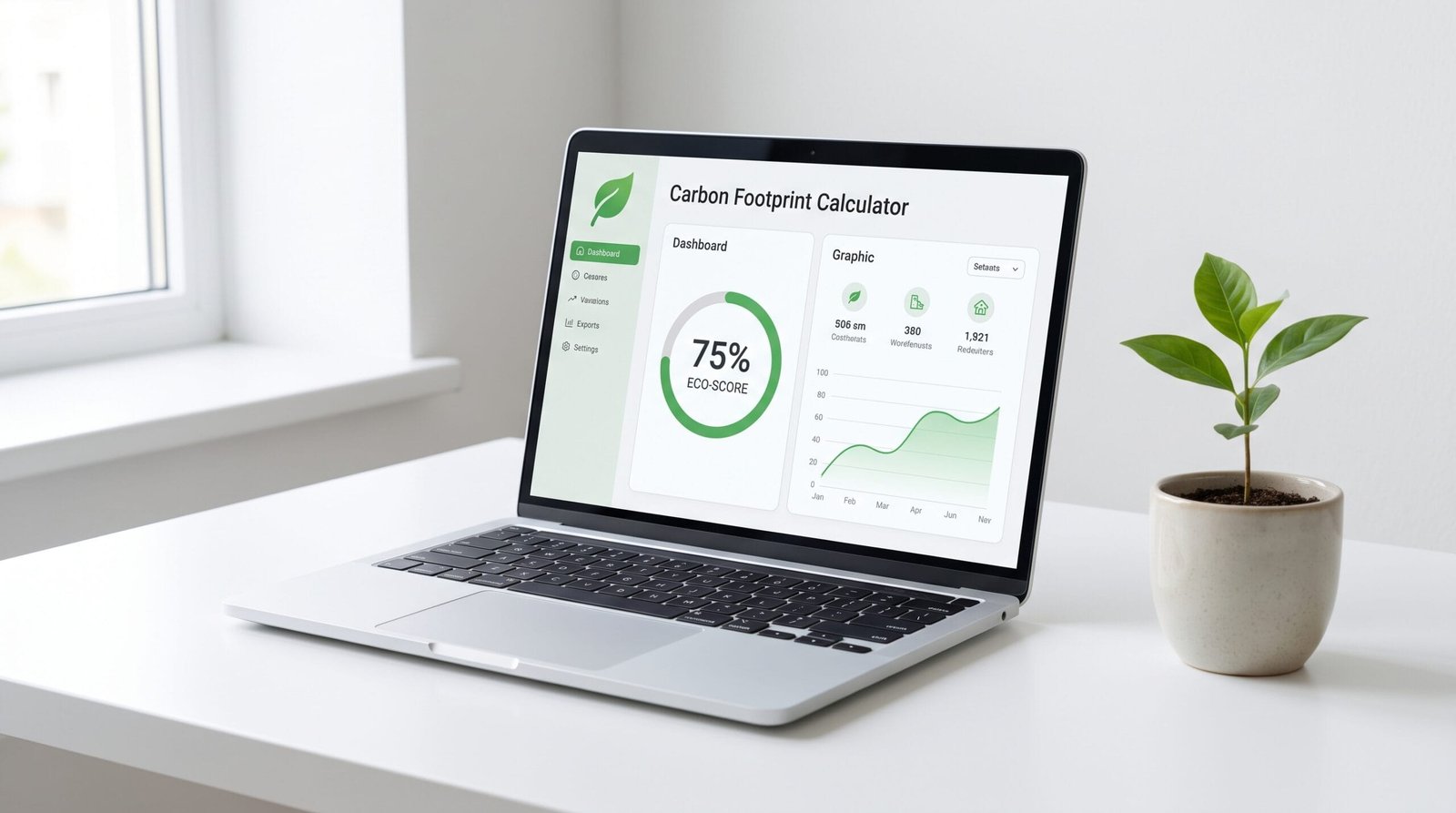
By 2026, sustainability was not only a corporate buzzword it was also a business imperative. Consumers are opting for sustainably responsible brands, investors are assessing firms based on performance against environmental, social, and governance (ESG) criteria, and regulatory bodies across the globe are imposing new climate disclosure regulations.
Having a good understanding of your environmental impact is now necessary when it comes to long-term success, whether you run a startup, a small business or a multinational company.
Yet, before you reach this step, to be able to assess what you can lessen, you need to measure and understand your emissions in the first place.
In this guide, you will learn what a carbon footprint is, why you should measure your Mixed Footprint, how businesses can decarbonize and why using our Free Business Carbon Footprint Calculator Tool is the quickest way to get started on the sustainability path and why measuring it matters.
What Is a Business Carbon Footprint?
A business carbon footprint refers to the total greenhouse gas (GHG) emissions generated by a company during a defined time period, and is generally measured annually.
These emissions are expressed as carbon dioxide equivalent (CO₂e), which enables the comparison of all other greenhouse gases in a common metric.
Business emissions typically come from:
- Electricity consumption
- Heating and cooling systems
- Company vehicles
- Business travel
- Employee commuting
- Manufacturing processes
- Purchased goods and services
- Shipping and logistics
- Waste management
- Supply chain activities
There is hardly a business, regardless of size, that does not emit some emissions. The very first step toward reduction is measuring those emissions.
The Year 2026, Why You Should Measure Your Carbon Footprint
Climate expectations continue to evolve. Demand for businesses to provide measurable sustainability, rather than PR environmental claims, is growing. By knowing their emissions, companies can more easily:
- Meet customer expectations
- Prepare for future climate regulations
- Improve operational efficiency
- Reduce unnecessary costs
- Win environmentally conscious customers
- Strengthen ESG reporting
- Build investor confidence
- Improve brand reputation
Failing to acknowledge your environmental footprint could mean lost chances and rising business risk in an increasingly sustainability-oriented marketplace.
Companies Can’t Survive on Personal Carbon Calculators
We are all quite familiar with personal tools such as the WWF footprint calculator or wider environmental assessment platforms that are sometimes called a global calculator. These tools perform a great service in explaining how people’s daily lifestyle choices do affect the environment.
On the other hand, companies are having to contend with a whole different nature of environment.
A company must account for:
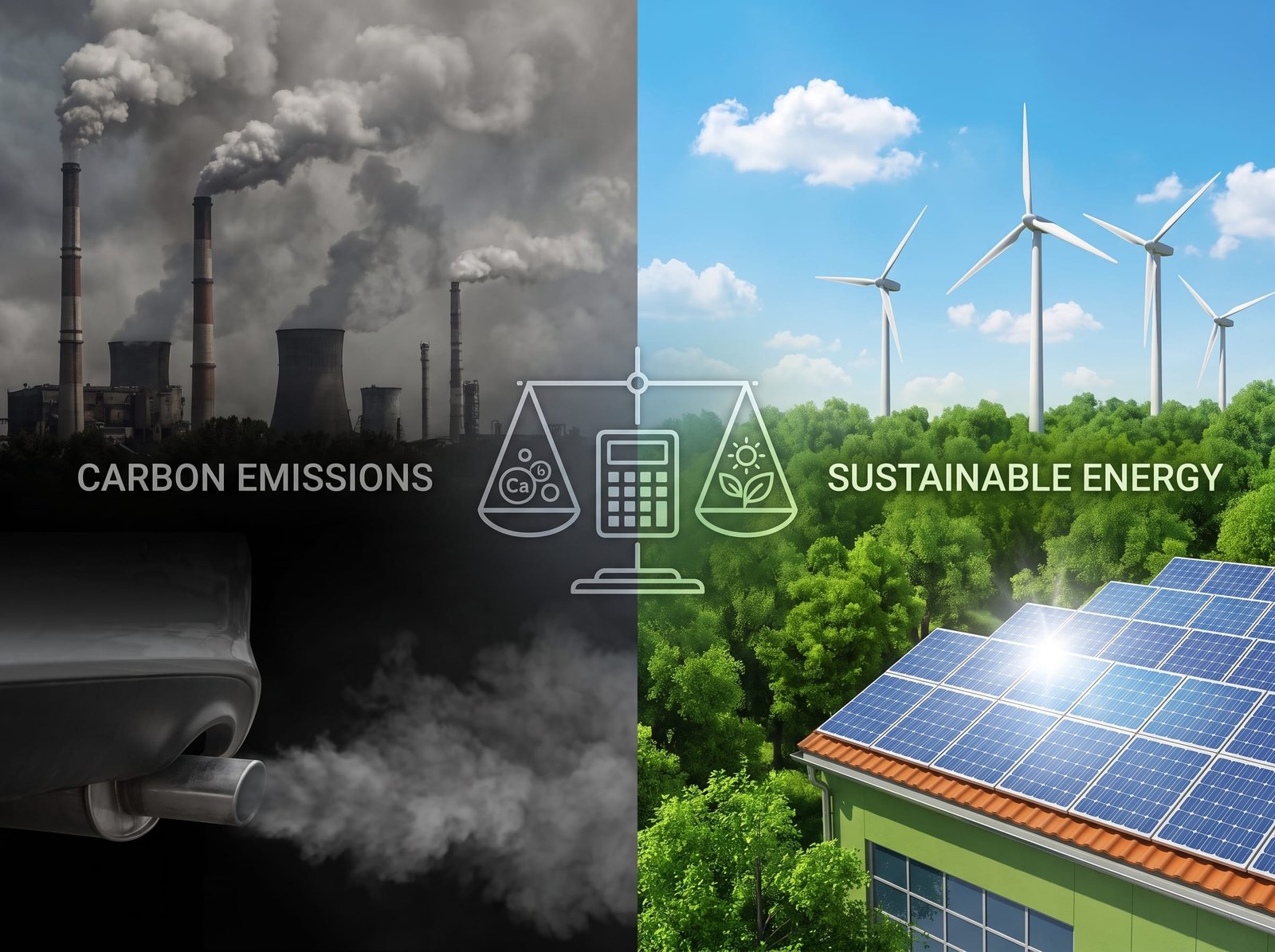
Energy Consumption
Electricity use in commercial buildings is often in multiples of electricity use in domestic premises.
Factors include:
- Office equipment
- Servers
- Production machinery
- Warehouses
- Retail locations
- Data centers
Transportation and Logistics
Businesses frequently generate emissions through:
- Product delivery
- Fleet vehicles
- Shipping partners
- International freight
- Employee travel
Supply Chains
Bought products and services (including raw materials) are often the largest source of emissions.
The exception to this is indirect emissions which need specialized calculations that personal tools can’t offer solutions for.
Waste Management
Different waste streams are produced by businesses, including:
- Packaging
- Manufacturing waste
- Food waste
- Electronic waste
- Construction materials
All of these factors make a business carbon footprint calculator specifically geared for the business sector by its very nature far more accurate than consumer calculators.
(You need to Business management tool? click here and check us tool)
Understanding Business Carbon Emissions
Corporate emissions are most commonly divided into three scopes.
Scope 1 Emissions
These are emissions from sources owned or controlled by your company.
Examples include:
- Company vehicles
- Fuel combustion
- Industrial equipment
- Heating systems
Scope 2 Emissions
Indirect emission of purchased energy.
- Examples include:
- Electricity
- Steam
- Heating
- Cooling
Scope 3 Emissions
These are indirect emissions along your value chain.
Examples include:
- Business travel
- Employee commuting
- Purchased goods
- Shipping
- Product disposal
- Supplier operations
Scope 3 emissions
account for the largest share of the total carbon footprint in a huge number of organisations.
Why is it financially beneficial to put a carbon footprint on it?
As people, innately drawn to status, many business owners view sustainability through the lens of a burden on their bottom line. Measuring emissions, in fact, frequently identifies cost savings opportunities. Benefits include:
Lower Energy Bills
Monitoring electricity and fuel consumption can expose inefficient equipment and energy waste.
Reduced Operating Costs
Transportation route optimization, waste reduction and logistics improvement usually decreases operation expenses.
Better Supplier Decisions
The use of the platform will allow the businesses to analyze suppliers for sustainability performance, and the long-term value.
Competitive Advantage
Customers want to know that a business is taking steps to measure and minimize its impact on the environment.
Easier Access to Funding
Sustainability performance is increasingly how banks and investors evaluate the ability to offer financing.
Brand Benefits of Sustainability
Consumers today expect businesses to do more to show legitimate sustainability, Companies that track and decrease emissions tend to see:
Greater customer trust
- Stronger brand loyalty
- Improved public perception
- Better employee engagement
- Increased media opportunities
- Stronger corporate reputation
Transparency builds credibility.
This is critical because measuring your carbon footprint gives you data that can support genuine sustainability, as opposed to ungrounded statements of marketing Armani.
How does a Business Carbon Footprint Calculator Work?
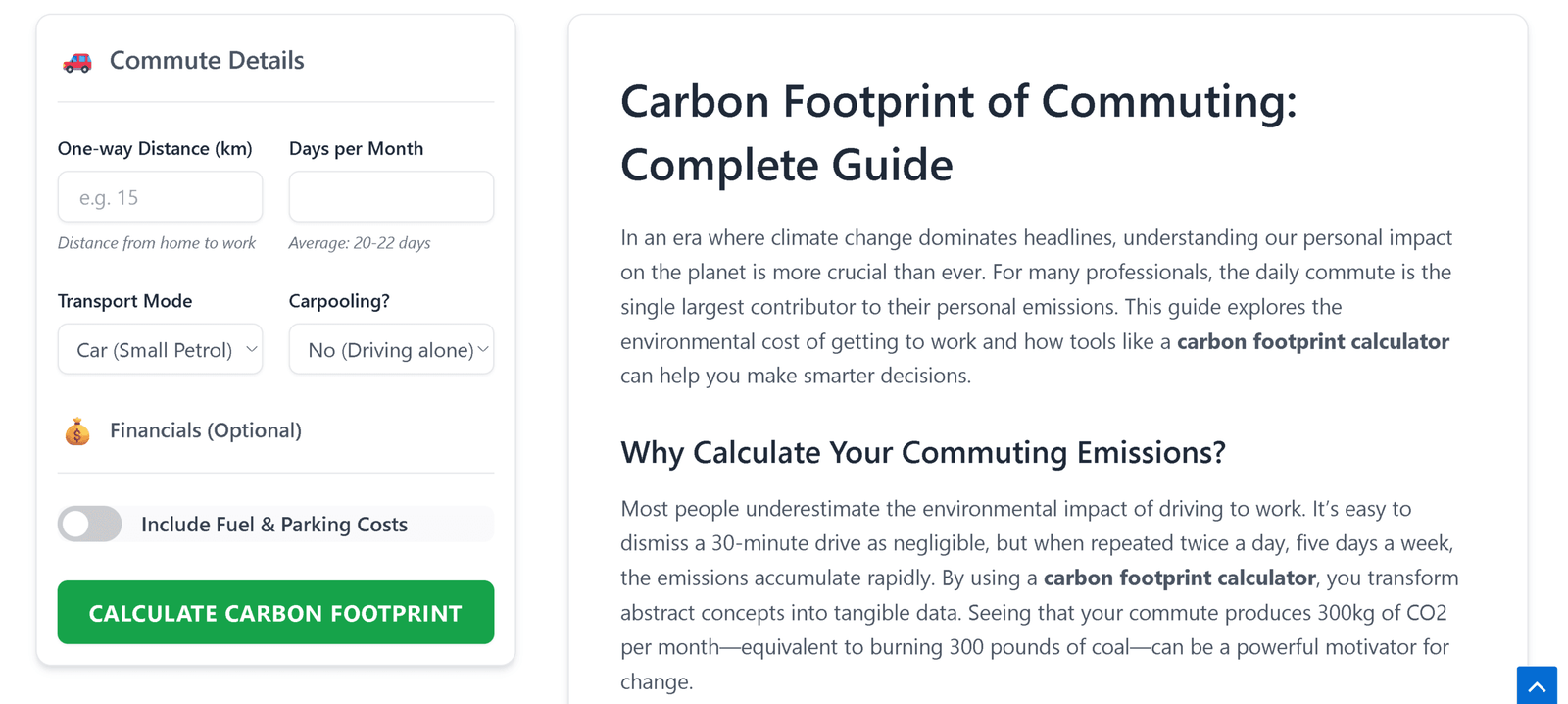
It uses the information about your business activities and estimates the greenhouse gas emissions using a Business Carbon Footprint Calculator.
Typical inputs include:
- Electricity usage
- Natural gas consumption
- Fuel usage
- Business travel
- Employee commuting
- Waste production
- Shipping distances
- Fleet size
- Office space
- Manufacturing activity
This information is input by the calculator and is converted into estimated CO₂e emissions using recognized emissions factors. The result gives you a concrete idea of your environmental impact and also where you can improve on.
How to Calculate Your Business Carbon Footprint: A Step-by-Step Approach
Step 1: Gather Utility Information
Collect data from:
- Electricity bills
- Gas bills
- Fuel receipts
- Water usage records
Step 2: Review Transportation
Include:
- Company vehicles
- Flights
- Train travel
- Delivery services
- Freight shipping
Step 3: Evaluate Business Operations
Review:
- Office locations
- Manufacturing facilities
- Warehouses
- Retail stores
How Step 4 works: Adding in the Supply Chain GHG Emissions
Consider:
- Purchased products
- Packaging materials
- Supplier transportation
- Imported goods
Step 5: Calculate Your Results
For an immediate idea of how many tonnes of carbon your businesses emits, enter your data into our Free Business Carbon Footprint Calculator Tool
Start Measuring Today
You will not wait until sustainability reporting is a must or customers want to know difficult environmental questions!
Get an instant estimate of your organisation across three key areas Use our Free Business Carbon Footprint Calculator Tool and find out how effectively you could measure and manage your impact on the environment.
How to Reduce Business Emissions: Practical Ways
After you measure your footprint, it is time to reduce it. Consider these strategies:
Improve Energy Efficiency
- Switch to LED lighting
- Upgrade HVAC systems
- Install smart energy controls
- Replace inefficient equipment
Reduce Business Travel
- Encourage virtual meetings
- Optimize travel schedules
- Promote remote work where appropriate
Choose Sustainable Suppliers
Collaborate with suppliers focused on emissions reduction and environmental performance improvement.
Reduce Waste
- Recycle materials
- Eliminate unnecessary packaging
- Digitize paperwork
- Improve inventory management
Transition to Renewable Energy
Where possible look to lower the operational emissions through using renewables electricity or onsite solar generation.
Each area can only improve a little, but when combined they can build up to something substantial over time.
The Importance Of A Dedicated Carbon Footprint Calculator For All Businesses
Generic tools might offer average cases but no one has the time to look broadly, in business specific detail.
A single business carbon footprint calculator for business provides:
- More accurate commercial calculations
- Industry-relevant emissions categories
- Better sustainability planning
- Improved ESG reporting support
- Easier year-over-year tracking
- Practical reduction insights
Unlike a general Carbon footprint calculator, business-focused ones take operational complexities into account which consumer calculators often miss out on.
Future-Proof Your Business Through Sustainability
Companies with strict environmental responsibility are setting themselves up for a competitive edge now. Those able to measure emissions today will be well placed to:

- Future climate regulations
- Customer sustainability expectations
- Supply chain reporting requirements
- Investor ESG assessments
- Green procurement standards
Today, sustainability is no longer just about compliance or reducing carbon dioxide emissions, it is about resilience, innovation, and long-term growth.
click here and calculate your carbon footprint instantly on free
Carbon Instant Report
It should not take months of analysis, and lots of expensive consultants, to know how your company affects the environment.
Condition it with our Free Business Carbon Footprint Calculator Tool and convey an estimate of your emissions in a few minutes, pinpointing the apex source(s) of carbon outputs, and begin touring your enterprise in the direction of salubrious overall performance.
However, if you work on ESG strategy, you are looking for operational efficiency, or you are just starting your sustainability journey, measuring your impact has never been easier, quicker, and ready to act with our calculator.
Conclusion
The first step toward reducing your companies impact on the environment is understanding it.
Business Carbon Footprint Calculator It provides the insights businesses need to lay out emissions, look for improvement targets, and create genuine sustainability strategies.
Against this backdrop, in 2026 companies that actively track and manage their carbon footprint will be in a better position to cement customer trust, streamline operations, comply and keep up with new reporting expectations and develop lasting competitive advantages.
Don’t let uncertainty prevent progress. Calculate your emissions today, take proper measures, and guide your business towards a more sustainable future using this Free Business Carbon Footprint Calculator Tool.
Frequently Asked Questions
What do you mean by a Business Carbon Footprint Calculator? It analyzes aspects including energy use, transport, business travel, waste, and supply chain actions to come up with an approximate carbon footprint.
A WWF footprint calculator is intended mainly for individuals to measure their own lifestyle. A business calculator focused on commercial activities like logistics, production, fleet operations, and corporate energy use (much more ‘enterprise’-friendly)
Yes. The Free Business Carbon Footprint Calculator Tool is designed for businesses to calculate their carbon emissions quickly and easily, enabling organizations to gauge their impact on the environment.
Data on electricity consumption, fuel consumption, transport fuel consumption, business travel, waste disposal, office space etc. need to be collected by most businesses and supply chain activities. The quality of carbon footprint estimates is directly proportional to the accuracy of the data that are used if there are no data then one cannot estimate carbon footprint.