Free Digital Nomad Tax Calculator & Remote Work Tools
Use free digital nomad and remote work calculators to estimate taxes, work costs, carbon emissions, commuting costs, and more. No signup required.
Save Time
Instant & Accurate Result
Trusted Tools
Reliable & up-to-date Calculator
Export Support
Guidable for Remote Worker
Our Tools
Use our tools, no signup, no login, and no register
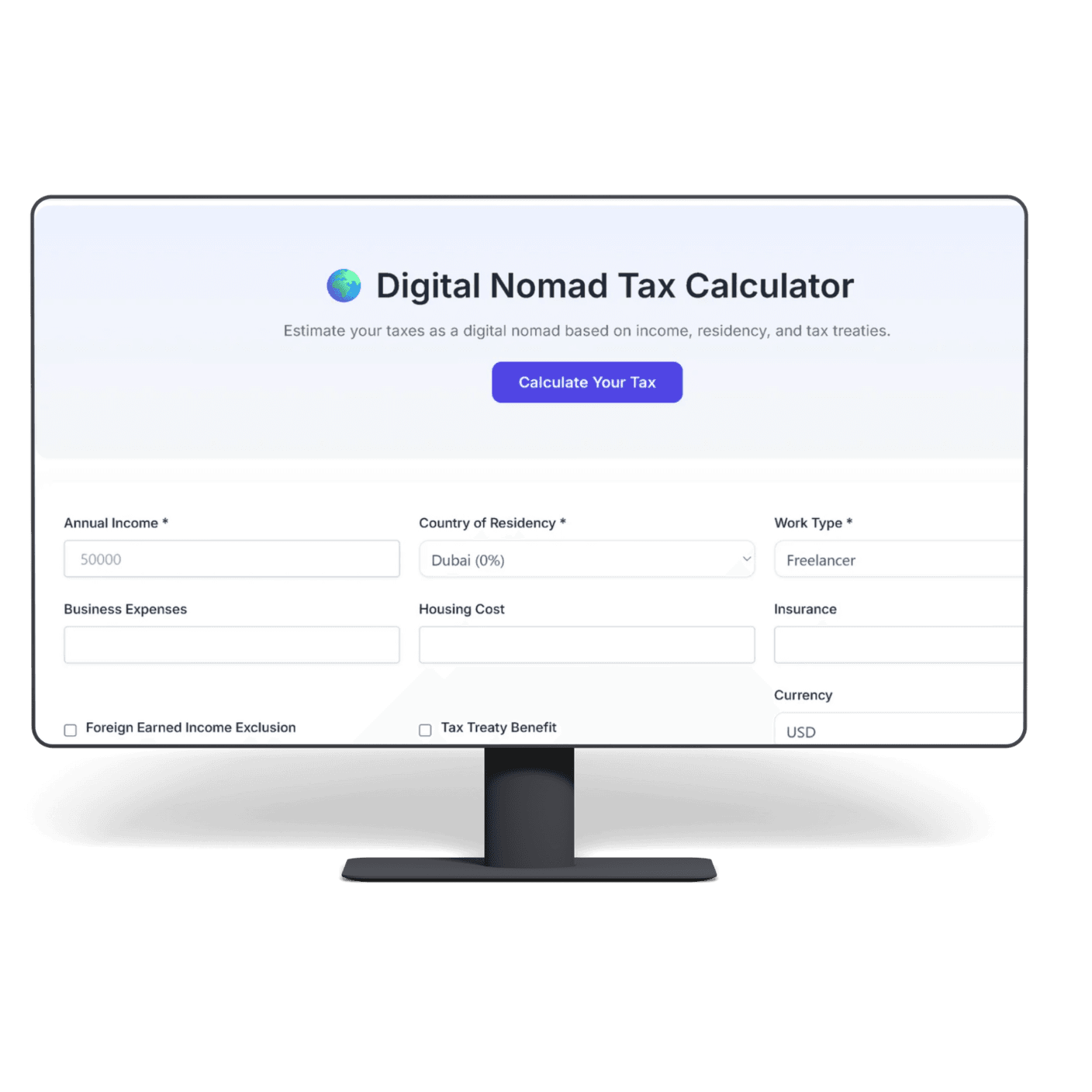
Digital Nomad Tax Calculator
Use our tools without log in
Carbon Footprint Calculator
measure and reduce carbon
Meeting Etiquette Checker
analyze and improve meeting behavior
Remote Work Boundary Clock
track and manage work-life
Remote Work Stipend Calculator
optimize remote stipend
WFH Electricity Cost Estimator
estimate home office electricity expenses accuratly
Commute work cost estimator
remote work vs commute work
Free Digital Nomad & Remote Work Calculators
Make smarter decisions about remote work, taxes, travel, and everyday work costs with free online calculators from Nomad Metrics.
Our tools help digital nomads, freelancers, remote employees, hybrid workers, and location-independent professionals estimate important costs and understand their numbers before making decisions.
No signup. No account required. Start calculating for free.
Free Tools for Digital Nomads and Remote Workers
Working from different countries gives you freedom, but it can also make taxes, work costs, commuting, and planning harder to understand.
Nomad Metrics brings practical calculators and tools into one place. Use a tool when you need a quick estimate, compare different options, or plan your next move.
Digital Nomad Tax Calculator
Estimate your potential tax amount based on income, tax residence, work type, expenses, and other inputs.
The Digital Nomad Tax Calculator can help you understand the difference between gross income, estimated tax, and income after tax.
Best for: digital nomads, freelancers, remote workers, and online business owners.
Carbon Footprint Calculator
Estimate the environmental impact of commuting and other travel activities.
Enter details such as distance, transport method, and travel frequency to get an estimated carbon footprint. Use the result to compare transportation choices and understand how regular travel affects your emissions.
Remote Work Boundary Clock
Remote work can make it difficult to separate work hours from personal time.
The Remote Work Boundary Clock helps you create clearer working and personal time boundaries. It can be useful for people working across time zones or managing flexible remote schedules.
Remote Work Stipend Calculator
Not sure what a fair remote work allowance should cover?
Use the Remote Work Stipend Calculator to estimate common work-from-home costs such as equipment, internet, workspace, and other work-related expenses.
It can help employees prepare for a stipend discussion and help employers review remote work costs.
WFH Electricity Cost Estimator
Working from home uses electricity. Your laptop, monitor, lighting, cooling, and other equipment can add to your monthly energy bill.
The WFH Electricity Cost Estimator helps you estimate the electricity cost of your home office based on equipment use, hours, and electricity rates.
Commute Cost Calculator
A commute can cost more than fuel or public transport fares.
Parking, maintenance, tolls, vehicle costs, and travel frequency can all affect your real commuting expense.
Use a Commute Cost Calculator to estimate your daily, monthly, and yearly commuting costs and compare them with remote work.
International Meeting Etiquette Checker
Global remote teams often work with people from different countries and cultures.
The International Meeting Etiquette Checker helps you review common meeting expectations and communication practices when working across cultures.
Why Use Nomad Metrics?
Nomad Metrics is designed around one simple idea: better information can lead to better remote-work decisions.
Instead of building complicated spreadsheets for every question, you can use focused online tools to estimate the numbers that matter.
Free to Use
Our calculators are designed to be accessible without a paid subscription.
No Signup Required
Use the tools without creating an account or completing a registration form.
Simple Inputs
Enter the information relevant to your situation and get an estimate without unnecessary steps.
Built for Remote Work
The tools focus on situations that digital nomads, freelancers, remote employees, and hybrid workers commonly face.
Practical Results
The goal is not to overwhelm you with data. Each calculator is designed to help you understand a specific question.
Useful for Planning
Calculator results can help you compare options, prepare a budget, or decide what information you may need before taking the next step.
Digital Nomad Tax Calculator
Taxes are one of the biggest financial questions for people who live and work across borders.
A digital nomad tax calculator can provide a starting estimate based on information such as income, tax residence, work type, expenses, and applicable tax factors.
Your actual tax obligation can depend on many details, including where you are tax resident, where income is earned, your legal status, citizenship, business structure, deductions, and tax treaties.
That is why a calculator should be used for planning and estimation, not as a replacement for professional tax advice.
What Can a Digital Nomad Tax Calculator Help You Understand?
A tax calculator can help you estimate:
Annual tax
Monthly tax
Income after estimated tax
Potential business expenses
The effect of selected tax factors
Differences between gross and net income
Possible planning scenarios
The results can give you a clearer starting point before you speak with a qualified tax professional.
Why Digital Nomads Need Better Financial Planning
Traditional employees often work and live in one country. Digital nomads may move between countries, work with international clients, receive payments in different currencies, or combine employment with freelance income.
That can make financial planning harder.
Common questions include:
Where am I considered a tax resident?
Do I need to report foreign income?
How much should I set aside for taxes?
What work expenses should I track?
How much does working from home really cost?
Is remote work cheaper than commuting?
How much does my travel contribute to my carbon footprint?
What should I include in a remote work stipend?
The right calculator cannot answer every legal or financial question. It can, however, help you organize the numbers behind those questions.
Remote Work Costs You Should Understand
Remote work can reduce some expenses while creating others.
You may save money on commuting, parking, meals near the office, and daily travel. At the same time, you may pay more for electricity, internet, equipment, workspace, and home-office needs.
Understanding both sides gives you a better view of the real cost of remote work.
Home Office Electricity
Computers, monitors, routers, lighting, fans, heating, and air conditioning can all use electricity.
Our WFH Electricity Cost Estimator can help you estimate how much your home office equipment may add to your energy costs.
Commuting Costs
If you work in an office, your commute may include fuel, parking, public transport, maintenance, tolls, and other expenses.
A commute cost calculation can help you compare those expenses with the cost of working remotely.
Remote Work Stipends
Employees may receive money from an employer to cover certain remote work expenses.
A stipend estimate can help you identify common costs and prepare a more informed request or budget.
Remote Work and Your Carbon Footprint
Remote work is often discussed as a way to reduce commuting, but the full environmental picture can be more complex.
Driving to an office creates transportation emissions. Working from home can reduce those trips, but home energy use also matters.
Your carbon impact can depend on:
Travel distance
Transportation method
Number of commuting days
Vehicle efficiency
Number of passengers
Electricity use
Heating and cooling
Work equipment
Travel frequency
A carbon footprint calculator provides an estimate based on the information and assumptions used by the tool.
Use the result to compare scenarios rather than treating it as a perfect measurement.
Tools for a More Flexible Work Life
Money is only one part of remote work.
People who work from home or travel while working also need to manage schedules, communication, boundaries, and time zones.
That is why Nomad Metrics includes tools beyond financial calculators.
Protect Your Work-Life Boundaries
When your home is also your office, work can easily extend into your personal time.
A boundary clock can help you define when your workday starts and ends.
Work Across Time Zones
Digital nomads and distributed teams often work with people in different locations.
Clear schedules can reduce missed meetings and help teams communicate more effectively.
Communicate Across Cultures
International teams may have different expectations around meetings, punctuality, communication style, and workplace behavior.
Our meeting etiquette tool can help you prepare before working with people from another cultural background.
Who Can Use Nomad Metrics?
Our free tools can be useful for a wide range of remote and location-independent workers.
Digital Nomads
Estimate taxes, work costs, travel impact, and other numbers while living and working across locations.
Freelancers
Use calculators to understand income, expenses, taxes, and the cost of working from home.
Remote Employees
Compare commuting costs, home-office expenses, stipends, and other work-related costs.
Hybrid Workers
Compare different office and remote schedules to understand how they affect your time, money, and travel.
Online Business Owners
Use calculators as part of your basic financial planning and expense review.
Employers and HR Teams
Estimate common remote work expenses and review potential stipend costs.
Sustainability Teams
Use carbon-related tools to explore commuting patterns and potential changes in travel behavior.
How to Use Nomad Metrics
Using our tools is simple.
1. Choose a Calculator
Select the tool that matches the question you are trying to answer.
2. Enter Your Information
Add the relevant income, distance, working hours, expenses, travel details, or other inputs.
3. Review Your Estimate
The calculator processes your inputs and presents an estimated result.
4. Compare Your Options
Use the result to compare different work, travel, or financial scenarios.
5. Take the Next Step
For tax, legal, accounting, or formal business decisions, use your estimate as a starting point and verify important details with an appropriate professional.
Learn More About Digital Nomad and Remote Work Planning
Calculators are useful when you need a number. Guides are useful when you need context.
Visit the Nomad Metrics blog for practical articles about digital nomad taxes, remote work costs, commuting, carbon emissions, and working across locations.
Topics You Can Explore
Digital nomad taxes
Tax residency
Remote work costs
Work-from-home electricity
Remote work stipends
Commuting costs
Carbon footprint
Remote work productivity
International work and communication
Digital nomad financial planning
Frequently Asked Questions
What is a digital nomad tax calculator?
A digital nomad tax calculator is an online tool that estimates potential tax based on information such as income, tax residence, work type, expenses, and other inputs. It provides a starting point for financial planning.
Are digital nomad tax calculators accurate?
A calculator can provide a useful estimate, but it cannot account for every personal tax situation. Tax rules vary by country and can depend on residency, income source, citizenship, deductions, treaties, and other factors. Important tax decisions should be verified with a qualified professional.
Do digital nomads have to pay taxes?
Digital nomads may have tax obligations depending on their tax residence, citizenship, income source, legal status, and the countries involved. Moving between countries does not automatically remove tax obligations.
What is tax residency?
Tax residency generally refers to the country or jurisdiction where you are treated as a tax resident under applicable rules. The test can involve physical presence, legal ties, domicile, and other factors.
Can digital nomads be taxed in more than one country?
In some situations, a person may have tax obligations in more than one jurisdiction. Tax treaties, foreign tax credits, residency rules, and local laws can affect how double taxation is handled.
Can I use Nomad Metrics calculators for free?
Yes. Nomad Metrics provides free online tools that can be used without a signup or account.
Do I need an account to use the calculators?
No account is required for the calculators currently available on Nomad Metrics.
Can I use these tools for tax or financial advice?
The calculators are intended for general education, estimation, and planning. They are not a substitute for personalized tax, legal, accounting, or financial advice.
How often should I review my remote work costs?
Review your costs whenever your income, work schedule, location, commuting pattern, equipment, or electricity use changes. Regular reviews can help you keep your estimates useful.
Can remote work reduce commuting costs?
It can. Working remotely may reduce fuel, parking, public transportation, vehicle maintenance, and other commuting expenses. The actual savings depend on your work schedule and personal situation.
Start With the Numbers That Matter
Remote work gives you flexibility, but flexibility works best when you understand the costs behind it.
Whether you are checking your digital nomad tax, estimating your WFH electricity cost, comparing remote work and commuting expenses, calculating your carbon footprint, or planning a remote work stipend, Nomad Metrics gives you a simple place to start.
Choose a calculator, enter your information, and use the result to make a more informed decision.
Start calculating today.
Important Disclaimer
Nomad Metrics calculators provide estimates for general education and planning. Results may vary based on the information entered, calculation methods, tax rules, emission factors, electricity rates, transportation data, and other assumptions.
Tax and financial calculations should not be treated as personalized professional advice. Tax laws and regulations can change, and individual circumstances can affect the final result.
For important tax, legal, accounting, sustainability reporting, or financial decisions, consult a qualified professional and verify the relevant official rules.